
How to get personal on Google? You don’t have to be rude!
Algorithms adapt to your preferences and choices.
Google also personalizes search results by default.
What does this mean? You get different results than someone else.
It has a major impact on search and beyond.
We can help people deal with that as publishers!
How does it work? See below for more.
What does personalized search mean for SEO?
Everybody gets what they focus on.
People may even end up in a carefully curated filter bubble.
Sure, you can depersonalize your search results.
Yet let’s be honest. Most people won’t change the default settings.
How does that level of personalization impact Web search?
- It means there are almost no objective search results left.
- Every individual gets a tailor-made search experience!
- It even changes based on context or depending on the device you use.
So how to deal with that? Social SEO!
It’s search engine optimization for personalized search among others.
I prefer to call it personal search as “personalized” is such a cumbersome word.
So how to SEO for personal search on Google?
Allow other people to search personally properly.
This literally means giving power to the people!
Support your audiences at curating their filters and including you in their bubbles.
This way you will show up on personal search results as well.
Personalized search has been creeping in
Of course personalized search is nothing new.
This is a huge part of how the Google algorithm works.
Personalization has been added step by step over the years.
At first search results have been localized.
Thus depending on where you live or from where you search from you’ll get different results.
Then Google started to look at your search history to provide similar results.
At last Google started to take notice what you like and thus adjusted your search results to favor these things.
Most people didn’t even notice until they realized that their family members can’t see the same results they see.
What does this mean for a healthy SEO Approach?
We don’t have to change everything.
We can add some new techniques to make people personalize their results in our favor.
These personalized results are the new standard for everybody dealing with the challenge of social SEO.
There are no objective rankings anymore.
Things can be in the top for me that aren’t even visible for you. Let’s take a closer look.
What you find depends on
- your whereabouts
- who you are
- and what you prefer!
Google search is not one-size-fits-all in 2026!
This is nothing spectacular
Most of the techniques listed below aren’t revolutionary.
You just have to step up efforts in these common sense directions.
Overall personal search means sites being subjectively regarded as authority sites will win.
At the end of the day you mostly need to make sure your site is viewed by as many people as possible as an authority site.
Ideally people will return, Google will notice and their preferences will reinforce their standing in the personalized results.
What can you do exactly to optimize for personalized results?
People will click on your search results because they know and trust you already.
This way they will in a way subscribe to Google results featuring you.
Google also uses clicks on search results and other “social signals” for their ranking algorithm by now.
What does it mean? It means that when people click your results and hit the back button it looks as if your site does not deliver.
Yet when they stay and return again Google notices and factors that in as a proof of trust.
So what can you do without breaking the bank as a mere mortal?
1. Use Google links from search results.
You can actually share links from Google results.
Google even creates a Google branded short link for you!
So e.g. I rank on top of Google organically for [freelance seo] behind Reddit in the US.
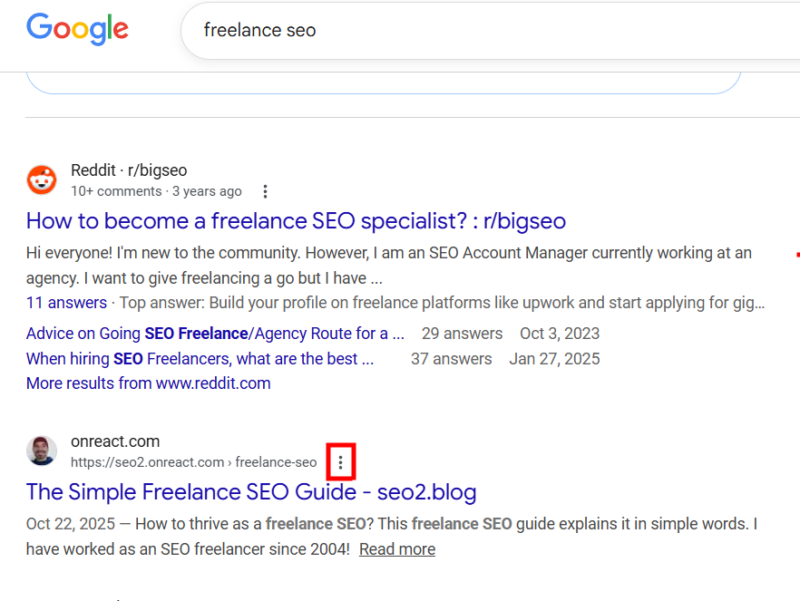
When I click the three vertical dots (marked in red by me) a sidebar opens on the right.
One of the options there is to “Share” the result on social media etc. It’s actually the first one!
Currently you can share to
- X (Twitter)
Or “click to copy link” and it gets shortened:
https://share.google/BbEURZWaFIdaD4Cmh
Don’t make it useless though.
Blog about Google search rankings for a particular query for instance.
I just did above haha.
By making people share your Google short links you add a strong user engagement signal.
The Google algo notices and remembers that someone cared so much for your results that they shared it directly.
2. Become a “preferred source” on Google.
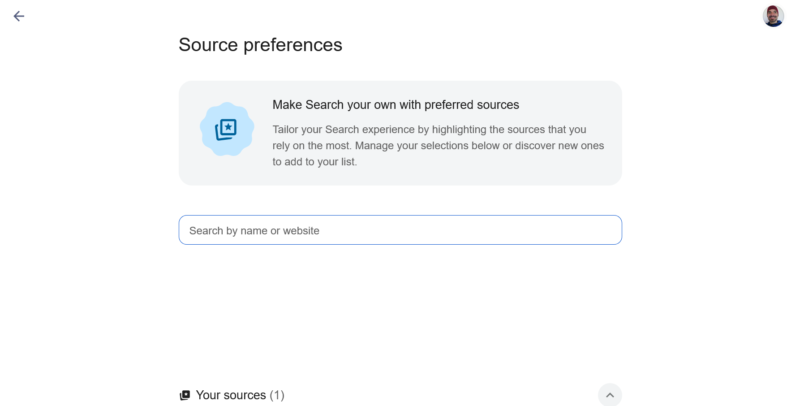
As of 2026 Google has the option to add particular sites as a preferred source.
This way you will gain more prominence in search results for that particular individual across devices!
You can see and add preferred sources on Google directly when you’re logged in.
This is probably in response to alternative search engines like Brave.
Brave allows to customize search results (by removing some sources e.g.).
Want to add this blog (seo2.blog) to your preferred sources?
Yay! Thank you! You can add my blog by clicking this address:
https://google.com/preferences/source?q=seo2.onreact.com
There you still have to confirm by checking the empty checkbox manually!
3. Ask people to search for you on Google.
As mentioned above Google factors in the actual user behavior on search results.
“My top search results will be tailored specifically for what Google’s systems think I will find helpful.”
So you can also ask people who like you already to search for you.
There is nothing wrong to ask your loyal fans to support you on another platform or in a new environment.
You ask them to follow you on social media already.
Ask them to show their support for your site on search as well!
Please search for [seo2.blog] on Google and click on this blog when you are logged in to your Google account.
Or search for the title above. You can do so by clicking this:
https://www.google.com/search?q=seo2.blog&udm=14
4. Optimize for subscribers and returning visitors.
Focus on regular visitors to establish trust.
The people who know you already will click your search results because they trust you.
How to optimize for regulars not just the causal search and social media visitor?
Add more substance and fewer clickbait headlines.
Same with overused headline formulas that appear as what Google by 2026 calls “non-commodity content”.
I call it boilerplate or “me too” content for ages.
Instead provide more follow ups and in depth articles.
Expand the insights on existing topics in new coverage.
5. Combine your resources.
Instead of spreading yourself too thin on many third party sites invest time and money into one single site/blog.
In the best case you focus on just one website address and brand.
Ideally you also have hub pages that combine existing content into similar topic clusters.
This way both Google searchers and people who arrive on their own accord can navigate your site better.
There are various tools that help you with that by now.
Just make sure your resources as in both content and energy are combined in one place.
Treat every other platform as a supporting one for your site and/or blog.
Likewise focus on a few third party sites where you expect to meet your audiences.
6. Establish a presence on highly authoritative UGC sites.
Go where people usually convene.
As of 2026 Reddit may be your best choice as it’s featured prominently in both conventional and AI search:
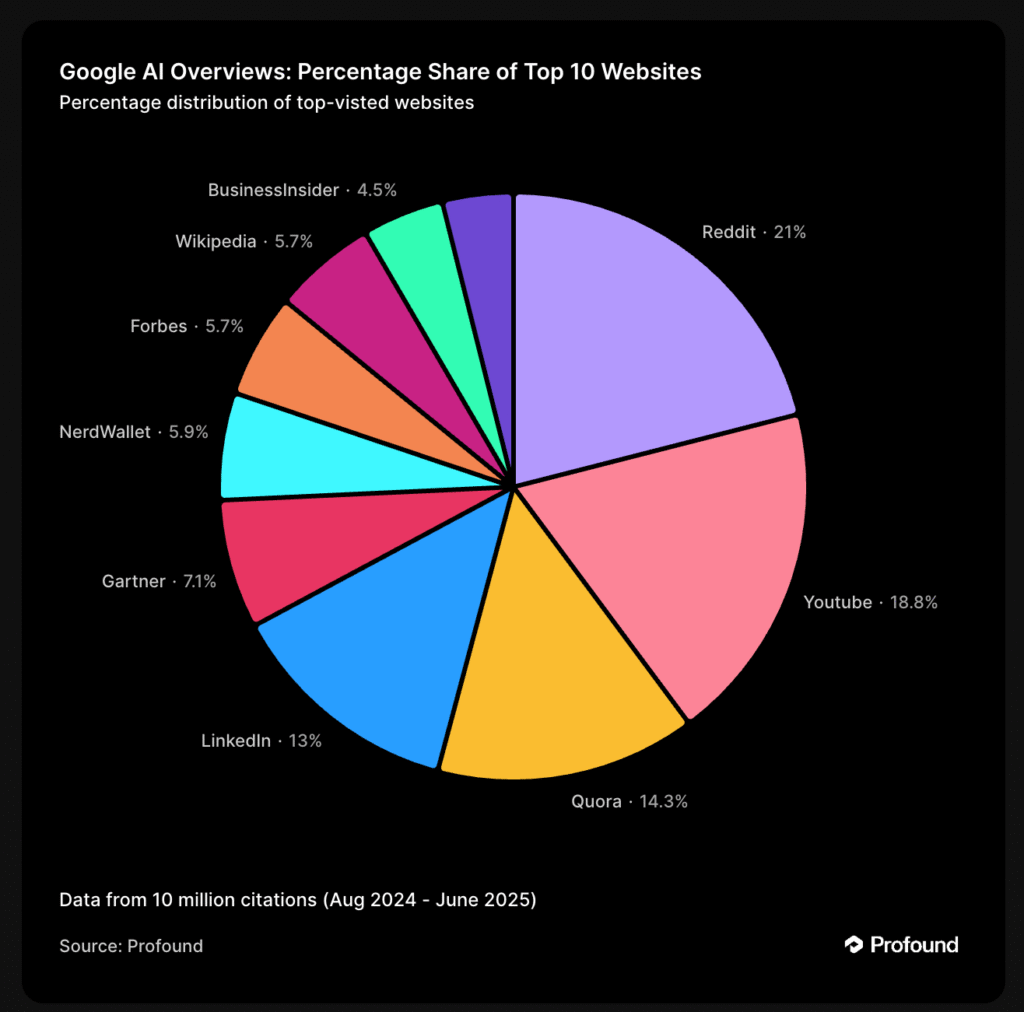
Just make sure for them not to outrank you.
Be wary of Wikipedia e.g.
They may outrank you and then some Wikipedia geek might rewrite the item to fit the 90% white, male, nerd agenda.
7. Work together with peers!
Why? You can cooperate to create Wikis, group blogs, communities.
Many social sites help with that.
Reddit is just the most popular example.
Bigger online social circles can compete with large brands, professional blogs and media outlets!
You can get more attention through their sheer people power.
So for example I help out with Ann Smarty’s Reddit r/SEO_for_AI community as a moderator.
8. Cut down on radical opinions.
Sadly people love the lowest common denominator.
That’s why many crude memes spread virally.
In case you disagree with the status quo they will cease to trust you.
People won’t click on your weirdo website again while searching.
A dose of healthy opportunism secures your success on personal search.
Google reflects the consensus in its algorithms these days on top of that.
Even humorous sites like The Onion get demoted!
Thus first recapitulate or summarize the current state of things you start from.
Only then present your different take on things!
Yet don’t forget to be unique either. As mentioned above “me too” content gets considered redundant by now.
9. Write for mass appeal not solely a niche.

Advanced SEO e.g. is a tiny “micro” niche.
Yet most people don’t even get basic SEO.
They may not even know the meaning of the acronym.
Attract larger audiences by content and postings with mass appeal.
That is don’t sell out by posting cat images. Instead rely on niche relevant “mainstream” topics.
Don’t write solely about SEO. Write about (the decline of) search in general e.g.
My popular post is simply on why Google search sucks.
It’s because of all the clutter and AI that prevent you from seeing actual results.
10. Join larger business platforms.
When you can’t beat them, join them!
Join the likes of Linkedin, Ebay or Etsy depending on your niche.
It’s a good idea but never forget that you can’t rely on those.
Build your brand and reroute your customers to your own online real estate.
I’m mainly on LinkedIn nowadays. You can follow me there.
11. Don’t use long generic names.
Limit the use of long keywords like anotherhugekeyworddomainname.com to get some cheap long tail SEO traffic.
At least make it short and spicy. This way it’s memorable. seo2.blog is for sure!
Instead rather rely on personal and other name branding. You can even brand products or techniques!
My name for instance is difficult to read and remember.
Thus I came up with onreact, seo2.blog, Tad Chef as “branded” terms you can find me at.
Google prefers fresh search results
While Google gets personal it is also looking for fresh and news-worthy content. So ideally you are
- blogging in a timely manner
- updating existing content frequently
- republish overhauled content as new
etc. to circumvent the need to rank as an authority site in “objective” search.
The more timely and/or recently updated your content is the better.
Either you get through as an authority or as fresh content.
The second way may be easier as people prefer what’s new as well.
Stale content gets demoted as it’s unhelpful!
Still in case you’re into long term sustainable social SEO you probably will prefer the techniques mentioned above.
Related posts:
SEO Works! How? Step by Step + Project Examples
Is Topical Authority an SEO Hype or the AI Content Crap Savior?
Is This the Best Affordable Semrush + Ahrefs Alternative for Small Business?
SEO is Alive! Celebrate with an Online Presence Consultation!
How Do "Stay on Google" Searches Impact SEO?
Social SEO Metrics to Use Instead of Website Traffic
All You Need to Know About Blogging in one Place!
How to Use Reddit for Social SEO Without Acting like a Jerk
Why SEO is Dead Serious: Google Hates Humor! #seohorrorstories